How to Get Your Home Improvement Business Found by AI Search Tools in 6 Months
A step-by-step visibility plan for concrete, paver, coating, painting, remodeling, and closet design contractors
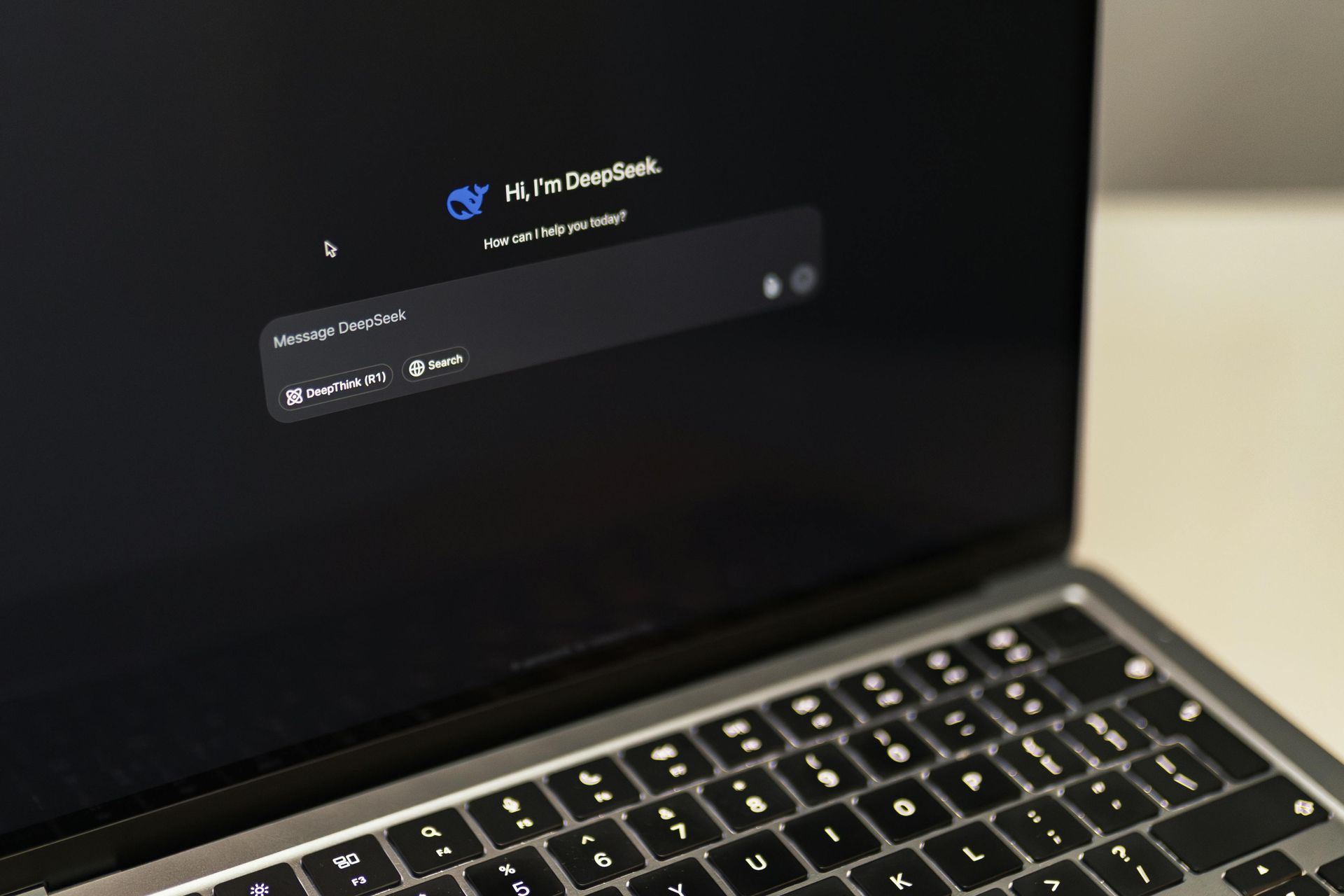
Picture this: A homeowner in your area is ready to pull the trigger on a backyard overhaul: travertine pavers, an outdoor kitchen, the whole project. They don't open a phone book. They don't even Google it the old way. They open ChatGPT and type: "Who does the best outdoor living installs near me?"
A competitor's name comes up. Yours doesn't.
That scenario is already happening. Every day, in every market. Homeowners planning paver patios, garage floor coatings, kitchen remodels, and custom closets are increasingly turning to AI tools like ChatGPT, Google Gemini, and Perplexity to research their projects and find contractors before they ever pick up the phone. These tools don't show the highest bidder. They surface the businesses with the most structured, credible, and well-organized content.
The good news? Most home improvement contractors haven't touched this yet. That's your window.
This guide breaks down a practical 6-month plan to build AI search visibility for your home improvement business. No tech background required. Whether you install concrete driveways, epoxy garage floors, custom closets, or do full kitchen remodels, this roadmap applies directly to your business and your customers.
Why AI Search Is Changing How Homeowners Find Contractors
Search behavior has shifted in a fundamental way over the last two years. Homeowners aren't just typing keywords into Google anymore. They're having conversations with AI tools, asking detailed questions, comparing options, and getting recommendations before they visit a single website.
Think about the kinds of questions a homeowner asks before committing to a $6,000 paver patio, a $3,500 garage floor coating, or a $45,000 kitchen remodel. They want to know the difference between epoxy and polyurea coatings. They want to understand whether travertine or porcelain pavers hold up better in Florida heat. They want to know how long a bathroom renovation actually takes and what to expect during the process.
AI tools answer those questions directly, and they pull from businesses that have clearly, helpfully answered them on their websites.
A concrete coatings company with a detailed blog post on "How to Prep Your Garage Floor Before Coating" gets surfaced as an authority when someone asks ChatGPT about garage floor prep. A paver installer with a page comparing travertine and concrete pavers for South Florida yards shows up when a homeowner researches options on Gemini. A remodeler with organized service pages covering kitchen, bath, and whole-home projects gets picked up in Google AI Overviews when someone searches for remodeling help in their city.
This isn't about being tech-savvy. It's about being the most helpful, well-organized business in your market. And making sure AI tools can find and understand what you do.
The 6-Month AI Visibility Plan: At a Glance
Here's the full roadmap before we walk through each phase:
- Month 1: Foundation & AI Readiness
- Month 2: AI-Friendly Content Creation
- Month 3: Local Optimization & Google Business Profile
- Month 4: Topic Authority & Schema Expansion
- Month 5: Social Signals & Video Integration
- Month 6: LLM Outreach & Evaluation
Each month builds on the last. By the end, your business will have the content depth, technical structure, local signals, and trust indicators that AI tools use to decide which contractors to recommend. This is the exact roadmap we implement in our clients' businesses to show up in ChatGPT, Perplexity, Gemini, and Manus with our
AEO, GEO, SEO Domination Essentials Program.
Month 1: Foundation & AI Readiness
Every great project starts with prep work. Before you pour a driveway, you grade the ground and set your forms. Before you coat a garage floor, you grind and profile the concrete. Your website is no different. If the foundation isn't solid, nothing built on top of it will hold.
In Month 1, the focus is on making sure AI tools can actually find, read, and understand your website. That means auditing your site for crawlability and indexability, essentially checking whether search engines and AI platforms can access your pages properly. It means reviewing and correcting your robots.txt file (the set of rules that tells search bots what they can and can't access), fixing any page rendering issues, and submitting your site to Bing Webmaster Tools, which feeds several AI platforms including ChatGPT.
Site speed and mobile performance matter here too. A slow, image-heavy website gets deprioritized by Google and AI crawlers alike. If your site takes five seconds to load on a phone, you're already behind.
Finally, Month 1 is when you add or correct schema markup. Schema is structured data that tells AI tools exactly what your business does, where you're located, and what services you offer. Think of schema as labeling your truck: instead of AI tools having to guess that you install garage floor coatings, you tell them directly in a format they're built to read.
What this looks like in the real world:
A closet design company using a popular website builder may have their CSS and JavaScript blocked, meaning AI crawlers can render their homepage but not their portfolio or service pages. Their beautiful custom closet photos effectively don't exist to search tools. Fixing that one technical issue can immediately unlock indexing of their most important content.
A remodeler with detailed photos and glowing reviews but no schema markup on their service pages gets passed over by AI tools in favor of a less-qualified competitor who simply has structured data in place. Schema is a fast, high-leverage fix.
Month 2: AI-Friendly Content Creation
Here's the simplest content strategy you'll ever hear: write down every question a customer asks you before they sign a contract. Then answer each one clearly on your website.
"How long does a garage floor coating last?" "What's the difference between stamped concrete and pavers for a driveway?" "How much does an outdoor kitchen actually cost?" "What happens during a closet design consultation?" These are the exact prompts homeowners are typing into AI tools, and businesses that provide real, detailed answers are the ones that get recommended.
In Month 2, the goal is to publish your first two AI-optimized blog posts in Q&A format, add FAQ sections to your core service pages, and begin building content clusters. A content cluster is a main service page (called a pillar page) supported by several related blog posts that go deeper on specific questions.
Here's what that looks like for each trade:
Pavers & Outdoor Living: Your pillar page is "Outdoor Living Installation in [Your City]." Supporting posts include "Travertine vs. Porcelain Pavers: Which Is Better for South Florida?", "How Long Does a Paver Patio Installation Take?", and "What Does an Outdoor Kitchen Really Cost in 2025?"
Concrete Coatings: Pillar page: "Garage Floor Coatings in [Your City]." Supporting posts: "Epoxy vs. Polyurea Coatings: What's the Difference?", "How to Prep Your Garage Floor Before Coating," and "How Long Does a Garage Floor Coating Last?"
Painting: Pillar page: "Interior & Exterior Painting in [Your City]." Supporting posts: "How Many Coats of Paint Does a Stucco Home Need?", "Best Exterior Paint for Florida Heat and Humidity," and "How to Pick the Right Sheen for Every Room."
Remodeling: Pillar page: "Kitchen & Bath Remodeling in [Your City]." Supporting posts: "How Long Does a Kitchen Remodel Take?", "Full Gut vs. Cosmetic Kitchen Remodel: Which Is Right for You?", and "What to Expect During a Bathroom Renovation."
Closet Design: Pillar page: "Custom Closet Design in [Your City]." Supporting posts: "Walk-In vs. Reach-In Closet Systems: Which Adds More Value?", "How to Measure Your Closet Before a Design Consultation," and "Wood Closet Systems vs. Wire Shelving: Pros and Cons."
Residential Concrete: Pillar page: "Concrete Driveways & Flatwork in [Your City]." Supporting posts: "Stamped Concrete vs. Pavers: Which Is Right for Your Driveway?", "How Thick Should a Residential Concrete Driveway Be?", and "How Long Before You Can Drive on a New Concrete Driveway?"
You don't need to publish everything at once. Two strong, well-structured posts in Month 2, with proper FAQ schema markup, starts building your authority signal immediately.
Month 3: Local Optimization & Google Business Profile
Your Google Business Profile (GBP) is your digital storefront. AI tools read it the same way Google does, and an incomplete or poorly optimized profile is the online equivalent of a job site with no signage, no photos, and no contact info.
Month 3 is dedicated to making your GBP a complete, accurate, and actively maintained reflection of your business. That means selecting the right primary and secondary categories, writing a keyword-rich business description, uploading high-quality project photos, and listing every service you offer with individual descriptions.
Beyond your GBP, this month covers aligning your business name, address, and phone number (what's called NAP consistency) across at least 20 online directories. When AI tools cross-reference your business information and find the same details everywhere, it reinforces trust. When they find inconsistencies, it creates doubt.
You'll also set up review response templates and embed recent reviews on your website, and refresh your About page and team bios. These are trust signals that AI tools increasingly weigh when evaluating which businesses to recommend.
Trade-specific moves that matter:
A paver and outdoor living company should list multiple GBP categories: "Paving Contractor," "Landscape Designer," and "Outdoor Kitchen Contractor," not just one. Each category is a trigger for different homeowner searches, and AI tools use them to match your business to the right queries.
A concrete coatings company should upload before-and-after project photos with descriptive, location-specific filenames like "epoxy-garage-floor-boca-raton.jpg" rather than generic names like "IMG_4521.jpg." Google and AI platforms read image metadata.
A painting company should break out its GBP services individually: interior painting, exterior painting, cabinet painting, pressure washing. Listing everything under one vague "painting" entry misses the opportunity for each service to match a different AI search prompt.
A remodeler or closet designer posting regular GBP updates with project details and neighborhood references ("Just wrapped a custom master closet build in Parkland, FL") builds location authority that strengthens local search visibility over time.
Month 4: Topic Authority & Schema Expansion
By Month 4, you've fixed your technical foundation, started producing content, and cleaned up your local presence. Now it's time to deepen your authority.
This month, you publish two more AI-optimized blog posts and finalize the content clusters around your two most important services, making sure every supporting post links back to the pillar page and the pillar page links out to the supporting posts. This interconnected structure tells AI tools that you don't just do this work. You genuinely understand it at depth.
You also expand your schema markup beyond the basics. If Month 1 was about getting schema in place, Month 4 is about making it comprehensive. How-To schema (for step-by-step process posts), Review schema (for customer testimonials), FAQ schema (for Q&A content), and Service schema (for each individual service page) all work together to make your content eligible for rich search results and AI answer features.
If you serve multiple cities or neighborhoods, Month 4 is also when you build location-specific landing pages. Not copy-pasted boilerplate with just the city name swapped out, but genuinely unique pages for each market.
Examples:
A concrete coatings company adds How-To schema to their "How to Prep Your Garage Floor" post, making it eligible to appear as a step-by-step rich result in Google and as a sourced answer in AI tools like Perplexity.
An outdoor living contractor adds Review schema to their project testimonial pages, increasing the trust signals that AI tools use when evaluating EEAT (Experience, Expertise, Authority, and Trust), a framework Google and AI platforms use to assess whether a business is worth recommending.
A remodeler serving the South Florida market builds individual location pages: "Kitchen Remodeling in Delray Beach," "Kitchen Remodeling in Boca Raton," "Kitchen Remodeling in Boynton Beach." Each includes unique content addressing local project context, neighborhood-specific considerations, and local customer references.
Month 5: Social Signals & Video Integration
Chances are you're already documenting your best work. Job site photos, before-and-after shots, maybe a few clips of a patio reveal or a finished closet walkthrough. Month 5 is about turning that content into structured, AI-readable assets that work harder for your business.
The goal this month is to upload one or two short-form service videos to YouTube with full transcripts and VideoObject schema markup, optimize your YouTube and LinkedIn profiles with consistent business information and links back to your website, and align your content presence across platforms so that every channel reinforces the same service area, service types, and brand identity.
Why does video matter for AI visibility? Because video transcripts are indexable text. A 60-second walkthrough of a finished garage floor coating, with a voiceover that naturally mentions your company name, the city, the product used, and the process: that transcript becomes a piece of structured content that AI tools can read and reference.
What this looks like in practice:
A concrete coatings company uploads a garage floor transformation time-lapse titled "Polyurea Garage Floor Coating in Boca Raton, FL: Before & After" to YouTube with a full written transcript in the description. That video becomes indexable content for AI platforms and a trust-building asset for homeowners who find the business through any channel.
A paver and outdoor living company posts a project reveal: "Travertine Patio & Outdoor Kitchen Build in Parkland, FL." The video links from the GBP profile, the outdoor living pillar page, and the business's Instagram bio, creating consistent cross-platform signals that strengthen local authority.
A painter uploads a cabinet painting transformation reel with a voiceover explaining the prep and painting process, then repurposes it as a blog post embed with the transcript converted to article text, getting double value from one piece of content.
A closet designer films a custom master closet tour with the homeowner reacting on camera, embeds it on the closet design service page with proper VideoObject schema, and shares a clip on LinkedIn with a project description that includes service type and city.
Month 6: LLM Outreach & Evaluation
Month 6 is where you find out how far you've come and close any remaining gaps.
Start with a simple exercise: search for your own business the way a homeowner would. Open ChatGPT and type "best paver contractors in [your city]." Try Gemini with "who does garage floor coatings near [your city]." Search Perplexity for "stamped concrete vs. pavers driveway cost" and see if your comparison blog post gets cited. If you're showing up, you've built something real. If you're not, or if a competitor is mentioned and you aren't, this audit tells you exactly what to address.
Beyond self-testing, Month 6 involves building brand mentions through Quora and Reddit answers (answering homeowner questions naturally, with your business name and location woven in), pursuing one quality backlink from a local media outlet, home décor blog, or supplier feature, and running a comprehensive reporting review across Google Search Console, Google Maps, AI Overviews, and featured snippet tracking.
Real-world examples:
A remodeling company answers a Quora question: "What should I expect during a kitchen remodel?" They provide a genuinely helpful, detailed answer that mentions their company name and service area. This builds brand entity signals that AI tools pick up when deciding which contractors to surface.
A closet design company earns a feature in a "Best Home Improvement Contractors in [City]" roundup published by a local lifestyle blog. That's one high-quality, relevant backlink that reinforces authority for every service page on the site.
A concrete company searches Perplexity for "stamped concrete vs. pavers for driveway" and finds that their Month 2 blog post on that exact comparison is already being cited in the AI answer. That's the compounding return on structured content done right.
What This Plan Covers
Here's everything built into a full AI SEO implementation for a home improvement contractor:
AI-Optimized Blog Content: Q&A articles, how-to guides, and comparison posts written around real homeowner questions, with FAQ schema, internal links, and structured formatting that makes them eligible for featured snippets and AI summaries.
Website AI-Readiness Setup: A full crawlability and indexability audit, schema implementation across all key pages, site speed improvements, and submission to Bing and AI-indexing platforms.
Google Business Profile Strategy: Category optimization, project photo strategy, regular GBP posts, review support and response templates, and service listing build-out.
Topic Authority Content Hubs: Pillar pages and supporting blog clusters built around your two to three core services, fully internally linked to create strong semantic structure.
Local Citation & Directory Alignment: NAP consistency audit and corrections across 20+ platforms, niche directory submissions, and citation building in home improvement and contractor-specific listings.
Video & Social Integration: Video schema, YouTube SEO, cross-platform profile consistency, and content repurposing guidance.
LLM Visibility Testing & Reporting: Monthly tracking of featured snippets, Google Maps performance, AI Overview appearances, and prompt-based visibility testing in ChatGPT, Gemini, and Perplexity.
Don't Want to Manage This Yourself?
Our Contractor Domination Essentials program takes care of everything covered in this plan, starting at just $500/month. We get home improvement businesses up and running in as little as 7 days, and our compressed implementation process is built specifically to help contractors skip the slow ramp-up and start generating visibility fast. It's the done-for-you version of everything in this guide, built for businesses that are ready to move now.
Is This Plan Right for Your Business?
This plan works best for home improvement contractors who:
- Operate in competitive local markets: metro areas, fast-growing suburbs, or markets with multiple established players
- Rely on project-based leads: estimates, design consultations, and in-home assessments
- Serve multiple neighborhoods or cities and want location-specific visibility in each
- Work on higher-ticket projects ($5,000–$50,000+) where homeowners research extensively before calling
- Have a strong local reputation that isn't yet translating to consistent online lead flow
If that describes your business, AI search visibility isn't a nice-to-have. It's the next significant lever for growth.
The Window Is Open. But Not Forever.
The homeowners planning their next paver patio, garage floor coating, closet build-out, or full kitchen remodel are already on AI tools researching their options. The only question is whether your business shows up when they ask.
Most home improvement contractors in your market haven't started building AI visibility. That gap won't last. The businesses that move now, the ones that build structured content, optimize their local presence, and give AI tools real reasons to recommend them, will own their markets for the next several years.
The businesses that wait will spend that same time watching leads go to whoever got there first.
Ready to find out where your business stands right now? Book a free AI SEO audit and we'll show you exactly how you appear (or don't) in AI search tools, what your competitors are doing that you aren't, and what it would take to change that picture fast.
Looking to grow your home improvement business?
As a home improvement contractor, you deserve a marketing partner who understands your unique needs. Contractor Click provides tailored solutions to drive consistent growth. We combine cutting-edge SEO, targeted Facebook Ads & Google Ad campaigns, high-converting websites, and intelligent automation to deliver measurable results. Let's discuss how we can help you achieve your revenue goals.
Contact us today to get started!